





Contractor, construction company
Why composite rebar and mesh is necessary and useful for contractors and construction companies

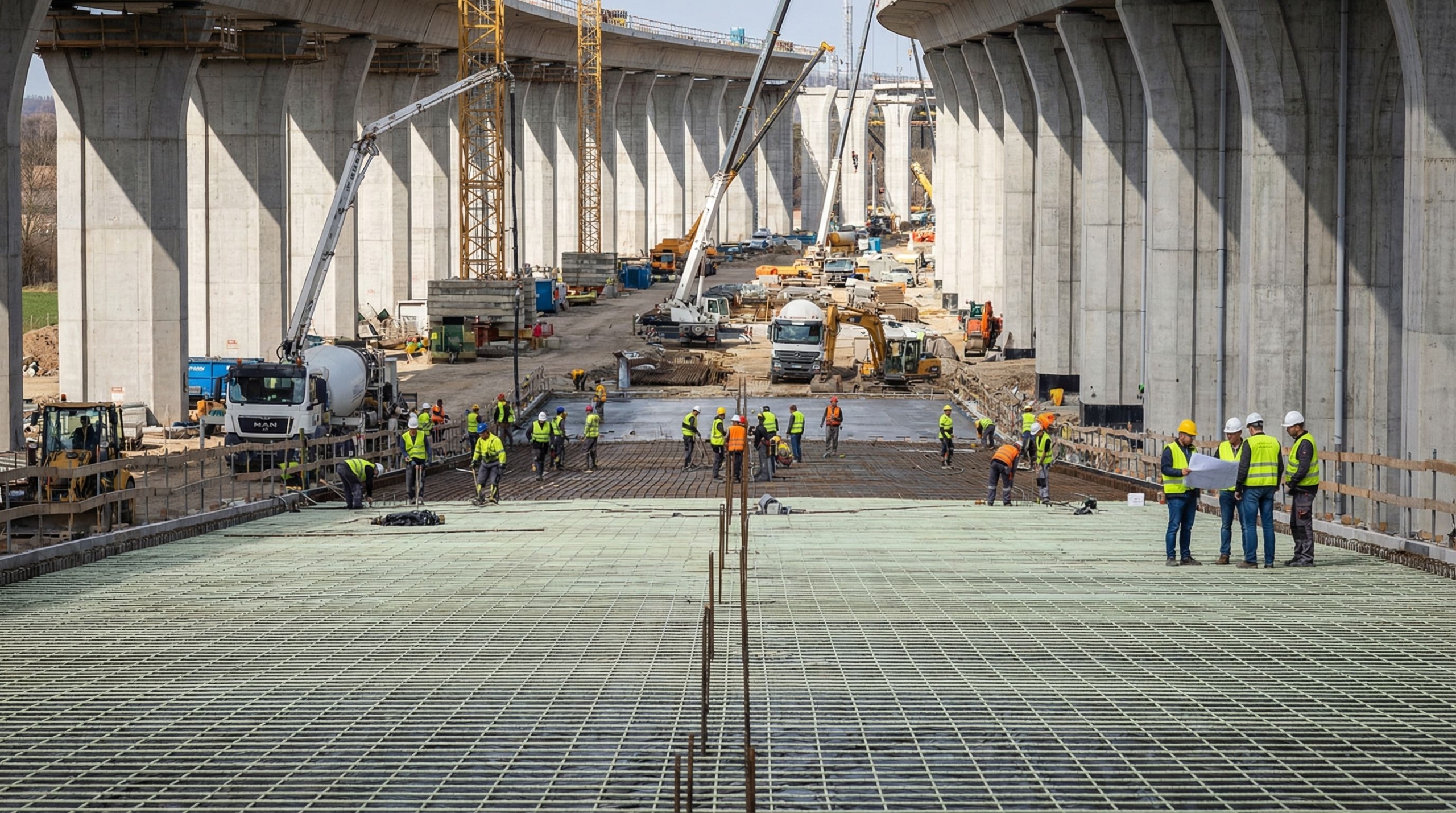
Modern construction, which includes many technological and material innovations, requires contractors and construction companies to find effective solutions to reduce costs, improve the quality and speed of work. One such innovative material is composite reinforcement and composite mesh, which are rapidly gaining popularity in the construction industry. Their advantage lies not only in economic and technological aspects, but also in their ability to provide contractors with a significant competitive advantage.
This article will explore why composite reinforcement and mesh have become important tools in the armoury of construction companies and contractors, and how their use can help reduce costs, improve work efficiency and increase customer satisfaction.
Competitive advantages for contractors and construction companies
For contractors and construction companies, choosing composite rebar and mesh provides an important competitive advantage. With today’s builders and clients looking for the most efficient and cost-effective solutions, the ability to properly communicate the cost-effectiveness of these materials will help contractors gain an edge in the marketplace.
Here are a few key aspects that create a competitive advantage:
- Reduced construction costs. The use of composite reinforcement and mesh reduces material, delivery and installation costs. Composite materials are significantly lighter than steel reinforcement, which reduces transport and storage costs. In addition, they do not need additional treatment to prevent corrosion as is necessary with traditional rebar, which also reduces costs.
- Lower installation costs. Composite reinforcement is simpler and easier to handle than metal reinforcement, which allows for faster installation work and lower labour costs. The lower weight also reduces the risk of injury during work.
- Long service life of structures. Composite materials do not corrode, which is especially important in high humidity or aggressive chemical environments. This reduces maintenance and repair costs during the life of the building, which is also an important factor for contractors and developers.
Cost-effectiveness for customers and developers
Composite reinforcement and mesh are certainly economically favourable not only for contractors, but also for customers and developers. They allow to significantly reduce the cost of construction, which is an important argument in negotiations and contracting.
Contractors who can properly communicate the economic benefits of these materials gain an important advantage in the bidding and tendering process. Since the whims of property developers are usually aimed at reducing costs, offering materials that save money is an important competitive strategy.
Benefits to customers and builders include:
- Reduced capital costs of construction. Due to the high strength and at the same time lightness of composite reinforcement and mesh, material consumption is reduced, which saves on procurement and transport. For property developers, this means that the overall project costs can be reduced.
- Lower maintenance costs. Because composite materials do not corrode, they require less maintenance over the life cycle of a building. This significantly reduces the cost of building maintenance and repair.
- Reduced construction time. Lighter and easier to use composite materials reduce the time spent on installation. This can be particularly important for property developers looking to complete projects as quickly as possible so they can start using the facilities as soon as possible.
Improving the quality and durability of buildings
The use of composite reinforcement and mesh also has a direct impact on the quality of construction works and durability of structures. Due to their increased resistance to mechanical damage, corrosion and other influences, composite materials significantly improve the performance of structures.
- Structural strength. Composite rebar is not only lighter than metal rebar, but also has excellent tensile and compressive strength properties. This allows contractors to build more stable structures that are better able to withstand loads.
- Resistant to chemical and temperature changes. Composite materials do not corrode even in damp or aggressive environments such as seawater or soils with high acidity. This is important for the construction of infrastructure projects such as bridges, tunnels, water supply systems.
- Minimising the risk of cracking. Composite mesh effectively reduces the likelihood of cracking in concrete structures. It distributes the loading evenly over the surface and helps to strengthen the concrete, which has a positive effect on the overall reliability of the structure.
Easy to use and adaptable to different conditions
Another important advantage of composite reinforcement and mesh is the ease of use. Not only do they reduce the weight of structures, but they can be adapted to specific construction conditions. This allows contractors to simplify the planning and execution of work considerably.
- Versatility of application. Composite materials can be used in many different types of structures, from residential buildings to industrial facilities and transport infrastructure. They are equally effective for reinforcing concrete slabs, columns, walls and even road surfaces.
For contractors and construction companies, composite rebar and mesh are not just innovative materials, but a powerful tool for improving construction efficiency.