





Composite rebar

Diameter
Format
Length
Mesh size
Поверхня
Application
Type
-
Composite rebar
TEXOLIT
d-4 mm

0.09 € / m
In stock
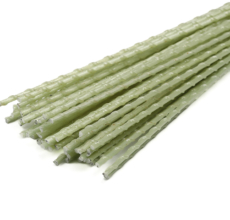
0.27 €
rod 3 m
-
Composite rebar
TEXOLIT
d-4 mm
0.09 € / m
In stock
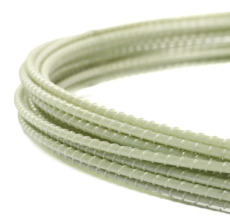
2.70 €
roll 30 m
-
Composite rebar
TEXOLIT
d-4 mm
0.09 € / m
In stock
4.50 €
roll 50 m
-
Composite rebar
TEXOLIT
d-4 mm
0.09 € / m
In stock
9.00 €
roll 100 m
-
Composite rebar
Armalit_BASE
d-4 mm

0.12 € / m
In stock
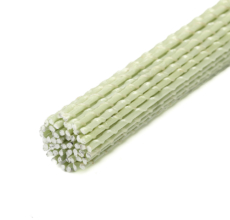
0.24 €
rod 2 m
-
Composite rebar
Armalit_BASE
d-4 mm
0.12 € / m
In stock
0.36 €
rod 3 m
-
Composite rebar
Armalit_BASE
d-4 mm
0.12 € / m
In stock
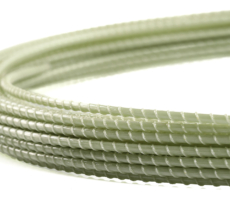
3.60 €
roll 30 m
-
Composite rebar
Armalit_BASE
d-4 mm
0.12 € / m
In stock
6.00 €
roll 50 m
-
Composite rebar
Armalit_BASE
d-4 mm
0.12 € / m
In stock
12.00 €
roll 100 m
-
Composite rebar
TEXOLIT
d-6 mm
0.17 € / m
In stock
0.34 €
rod 2 m
-
Composite rebar
TEXOLIT
d-6 mm
0.17 € / m
In stock
0.51 €
rod 3 m
-
Composite rebar
TEXOLIT
d-6 mm
0.17 € / m
In stock
5.10 €
roll 30 m
-
Composite rebar
TEXOLIT
d-6 mm
0.17 € / m
In stock
8.50 €
roll 50 m
-
Composite rebar
TEXOLIT
d-6 mm
0.17 € / m
In stock
17.00 €
roll 100 m
-
Composite rebar
Armalit_BASE
d-6 mm
0.23 € / m
In stock
0.46 €
rod 2 m
-
Composite rebar
Armalit_BASE
d-6 mm
0.23 € / m
In stock
0.69 €
rod 3 m
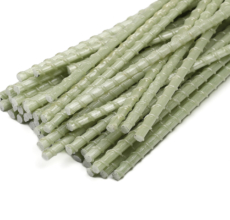
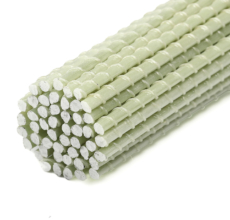
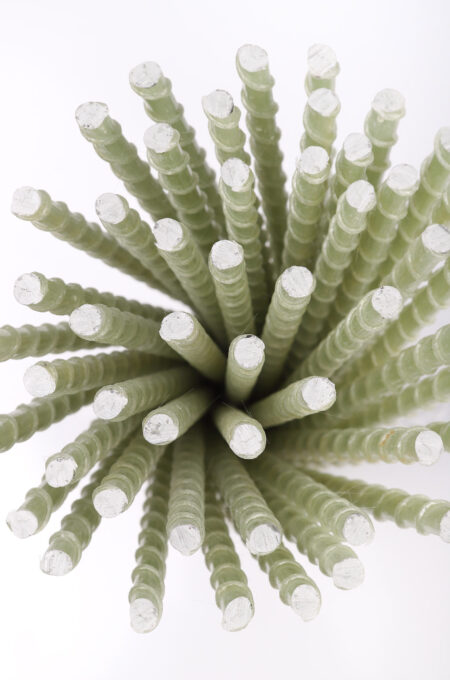
Composite rebar is a non-metallic rod made from multiple layers of glass fibers impregnated with a thermoplastic binder. During polymerization, these rods transform into a strong and rigid composite structure known as GFRP rebar. This type of reinforcement has wide application in construction and has become one of the most sought-after and modern building materials, gaining recognition in various parts of the world. Its popularity is due to several advantages compared to traditional metal reinforcement.
You can buy composite reinforcement at the best fiber rebar price from the national manufacturer, Armalitas.
Comparative characteristics of basalt, cFRP rebar, and GFRP rebar
Strong, lightweight, and corrosion-resistant composite reinforcement, which you can buy from a national manufacturer, is already gaining recognition among experienced builders. However, many craftsmen who are used to traditional metal materials sometimes doubt the ability of carbon, fiberglass, or basalt fiber to fully replace metal.
Such doubts are due to a lack of information about the capabilities, applications, and characteristics of composite reinforcement bars. To address this misunderstanding, we will provide a comparative overview of the main technical characteristics of metal and composite reinforcement.
Calculate the cost-effectiveness of replacing steel reinforcing materials with composite materials using the calculator on the website
Steel
Diameter
mm
Quantity
Unit cost
Total weight
kg
Total cost:
€
Composite
Diameter
0
mm
Quantity
0
m
Unit cost
0
€/m
Total weight
8
kg
Total cost:
8
Steel
Diameter
mm
Quantity
Unit cost
Total weight
kg
Total:
€
Composite
Diameter
8
mm
Quantity
8
m2
Unit cost
0
€/m2
Total weight
8
Total:
8
€
WARNING! The given recalculation is standard only for the standard use of reinforcement of the Armalit_BASE series, which meets the standards of DSTU 9065:2021. Recalculation using this calculator does not apply to the use of reinforcement in floor slab structures. The recalculation of the use of composite reinforcement in floor slabs is calculated individually for a specific project, but according to experience to date, it is not cost-effective.
COMPOSITE REINFORCEMENT AND MESH SHOULD BE USED EXACTLY WHERE IT IS NEEDED (see "MORE INFO").
Technical characteristics of composite mesh and reinforcement
Features
Steel
Composite
Strength limit, MPa
390
1000
Modulus of elasticity, GPa
200
50
Coefficient of thermal conductivity, W/m°C
46
0.35
Density, t/m³
7.85
2
Linear coefficient of thermal expansion, mm (for concrete 0,07 mm)
0.13
0.09
Relative elongation, %
14
2.2
Corrosion resistance
low
high
Radio transparency
low
high
Electrical conductivity
electrically conductive
dielectric
Features
Steel
Composite
Strength limit, MPa
390
1000
Modulus of elasticity, GPa
200
50
Coefficient of thermal conductivity, W/m°C
46
0.35
Density, t/m³
7.85
2
Linear coefficient of thermal expansion, mm (for concrete 0,07 mm)
0.13
0.09
Relative elongation, %
14
2.2
Corrosion resistance
low
high
Radio transparency
low
high
Electrical conductivity
electrically conductive
dielectric
Fields of application
-
Strip foundations on an elastic basis
-
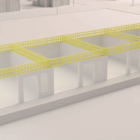
Arrangement of monolithic reinforcing belts
-
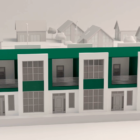
Сottage construction
-
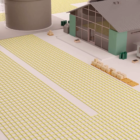
Industrial construction
-
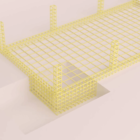
Reinforcement of industrial floors and foundations
-
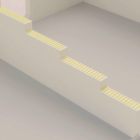
Wall reinforcement from foam blocks and bricks
-
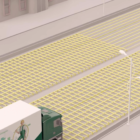
Construction of roads and access roads
-
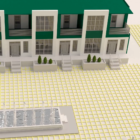
Arrangement of foundations for high-quality laying of decorative coatings
-
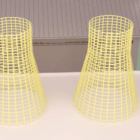
Installation of concrete foundations and chemical tanks
-
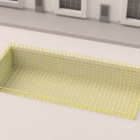
Construction of bowls of pools and artificial reservoirs
-
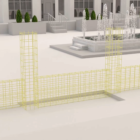
Construction of fences
-
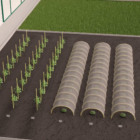
As supports for plants and greenhouses
Advantages of composite rebar
In European countries, concrete elements with glass fiber-reinforced polymer rebar are actively used in the construction of strategic importance and operating in conditions of high humidity, such as dams, bridges, and tunnels.
GFRP rebars are often used for foundations, floor screeds, belt reinforcement, and other construction works. This popularity is a result of several characteristics of this material:
- High strength, exceeding metal by 2.5-3 times;
- Lightweight, making FRP rebars several times lighter than steel rods of the same diameter, reducing the weight of concrete structures and facilitating installation work;
- Corrosion resistance, increasing the service life of the material and the concrete structures themselves, reducing maintenance costs;
- There is no need for welding to connect the rods, as clamps are used, which significantly speeds up the frame assembly;
- Resistance to aggressive influences;
- No effect on radio wave propagation and no interference created;
- Has a low thermal conductivity coefficient, not acting as a cold bridge;
- Identical coefficient of expansion to concrete prevents the formation of cracks in case of temperature fluctuations.
The use of polymer glass fiber reinforced polymer rebar contributes to reducing overall construction costs, which in turn increases economic efficiency, thanks to the following factors:
- Material savings. Thanks to the increased strength of composite rebar, it’s possible to acquire rods of smaller diameter while maintaining equal strength, resulting in significant savings.
- Minimization of logistical costs. The lightweight nature of the material reduces logistics expenses. For example, an 8-millimeter GFRP rebar weighs only 10 kg for a length of 100 m, whereas its steel counterpart with a diameter of 12 mm and a length of 100 m weighs 88 kg.
- Efficient packaging. The ability to compactly package FRP rebar into coils reduces transportation costs and unloading expenses.
- Increased speed of installation work. The use of FRP reinforcement bars accelerates the installation process, leading to reduced labor costs and shorter project completion times.
- Adaptive lengths and waste reduction in installation. The possibility of using adaptive lengths contributes to more efficient material utilization, which is an additional factor in overall economic efficiency.
In addition to numerous advantages, composite polymer rebar has some limitations that make it less preferable compared to its metal counterparts. These limitations include a lower modulus of elasticity and relatively low heat resistance, limiting the maximum operating temperature to 200 degrees Celsius.
Due to these characteristics, the use of fiber-reinforced polymer bars is limited in load-bearing structures subject to deflection and in conditions where high fire resistance requirements are imposed. However, in several other concrete structures operating on elastic foundations, where the values of these indicators have limited influence and high-strength characteristics are more important, composite fiberglass rebar confidently serves as a recommended and effective construction material. Such structures include:
- Strip foundations
- Industrial floors
- Belt reinforcements
- Flat roofs
- Service areas of commercial premises
- Loading and unloading areas of industrial and agricultural facilities, etc.
Glass fiber-reinforced polymer rebar from the manufacturer
Armalitas is one of the composite rebar manufacturers of high-quality composite construction products. The reinforcement is sold under the Armalit and TEXOLIT brands. We offer our products for sale not only in Ukraine but also beyond its borders.
Our company utilizes progressive foreign experience and composite rebar technologies in the production of fiber-reinforced polymer rebar. The production process employs time-tested technology and the best raw materials from well-known brands on the market. Additionally, the reinforcement production takes place on professional European equipment, ensuring a high degree of reliability and strength for the finished products.
We offer to buy composite reinforcement directly from the manufacturer at a competitive fiber rebar price. Thanks to the enhanced energy efficiency characteristics of our equipment and the high level of automation in most production processes, we achieve a reduction in the human factor’s influence to maintain a consistently high level of product quality. Additionally, labor costs are reduced due to the decreased need for technical personnel to fully service the equipment during production, resulting in the best basalt, fiberglass, and carbon fiber rebar prices.
Composite reinforcement: features and types
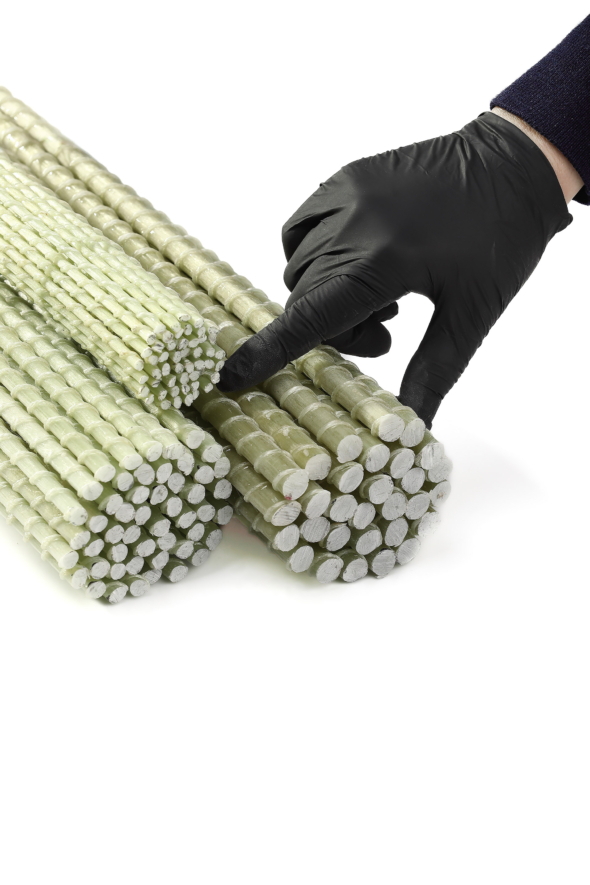
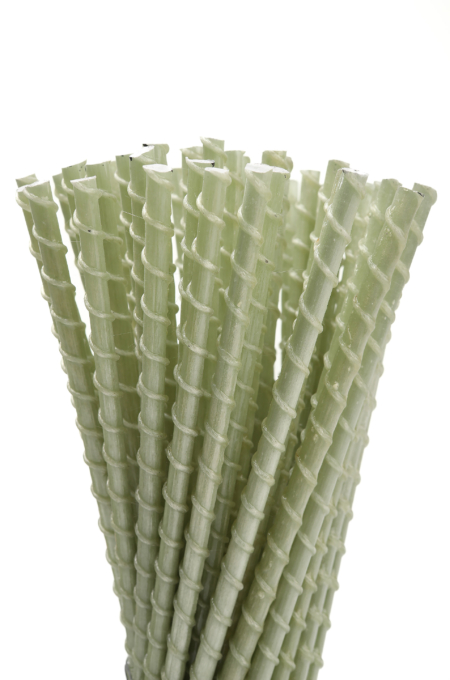
Composite reinforcement is a popular type of reinforcement made from various composite materials. There are reinforcements made from fiberglass, carbon fiber, or basalt fiber. It consists of fibers bound together by a thermoplastic or thermosetting polymer. Visually, its composition can be determined by color: basalt and carbon fiber rebar are usually black, while glass fiber rebar is white with a yellowish tint.
Currently, the use of GFRP rebars as reinforcement in concrete holds a leading position in the market, accounting for about 80% of the total volume, due to its better price-to-quality ratio. Basalt reinforcement comes in second. Carbon fiber reinforcement rods are almost never used due to their high cost.
Consumer market fiber-reinforced rebar products are available in other bright colors, but it should be noted that this is simply pigment added to attract the buyer’s attention or for convenient differentiation of rods of different diameters. With the correct choice of pigment, the physical properties of the material remain unchanged. However, if the dye is chosen incorrectly, there is a risk of deteriorating the strength characteristics of the polymer matrix responsible for the reinforcement’s strength. Rods have variable cross-sections designed to adapt to different operating conditions within reinforced concrete structures.
In addition, there are various surface treatment methods for non-metallic and GFRP rods:
- Periodic wrapping—the rod is wrapped with a specially formed fiberglass bundle, providing excellent adhesion to the concrete mass. To reduce costs and simplify the production process, some manufacturers use ordinary nylon cords as a periodic profile.
- Conditionally smooth, coated with fine-grained quartz sand. In this method, mechanical strength in adhesion to concrete is provided not by a periodic profile in the form of winding, but by an uneven surface formed by granules of adhered abrasive. Contrary to sellers’ advertising claims, it has the lowest adhesion to concrete and the highest rate of outer layer destruction in the alkaline environment of concrete when using epoxy resins.
- With artificial irregularities—additional profiling of rods during production. Due to the costliness of the technological process for this method, it is practically not used.
Range of composite and FRP rebar from the Armalit manufacturer
We are focused on large-scale production of composite reinforcement and are ready to meet any needs for this construction material. We offer the following options for your convenience:
- At our company, you can buy glass fiber-reinforced polymer GFRP rebar in coils ranging from 30 to 200 meters or in the form of rods ranging from 2 to 12 meters in length.
- We have a large stock of products ready for shipment to customers at any time.
- If you wish to purchase GFRP bars directly from the manufacturer in bulk, we recommend placing a pre-order in advance. In this case, we will fix the composite rebar price for you at the current level, and the batch will be ready within the agreed timeframe.
Within the manufacturer’s range, the following varieties of fiberglass rebar are available:
- Composite reinforcement Armalit Base is the flagship product of the premium quality of the manufacturer. The Armalit Base series of rebar is produced following the standards of DSTU 9065:2021 (state standard). Armalit Base reinforcement is intended for use primarily in construction as a modern technological alternative to A400 steel reinforcement. Due to the full compliance of the main nominal characteristics of this series (internal diameter, cross-sectional area, and mass) with regulatory requirements, only Armalit Base should be used in the design and project calculations of concrete structures.
- Composite reinforcement TEXOLIT is the manufacturer’s basic series, offering a product in an affordable fiberglass rebar cost range. The TEXOLIT series is produced following TU U 22.2-44839733 (manufacturer’s technical specifications). Glass fiber reinforced polymer bars TEXOLIT can also be used in construction as reinforcing material in non-critical structures, for universal construction or household needs. The series, in terms of the main characteristics of diameters and mass, is similar to composite reinforcement widely represented in the construction market. However, unlike other brands, it has a high degree of reliability and strength in finished products due to production on European equipment with a high level of automation in production processes and the use of raw materials from well-known professional manufacturers. This series, like other similar brands on the market, cannot be used in the design of concrete structures because the main nominal characteristics (internal diameter, cross-sectional area, and mass) have some differences from regulatory requirements.
The use of composite fiberglass rebar
Polymer, glass fiber, and carbon fibre rebar is used in industrial and residential construction. It is incorporated into foundations, and used in structural elements on agricultural properties, in the food industry, chemical industry, and for construction of housing.
The GFRP rebar for sale offered by Armalit is in demand for the following purposes:
- For the construction of strip foundations of buildings of various purposes and belt courses.
- For the installation of industrial floors and other monolithic bases with high load levels in various industries, agriculture, and commercial facilities.
- When creating and repairing road surfaces, bridges, tunnels, railway and tram tracks, crossings, and airport runways.
- Reinforcement of underground reservoirs for water treatment facilities, chemical and oil refining plants, basins, and fountains.
- Construction of shore protection structures, port facilities, docks, dams, and embankments.
- In structures where magnetic or electromagnetic transparency is required (electrical switchboards, rooms for magnetic resonance imaging examinations, experimental laboratories).
- Reinforcement of walls made of aerated concrete, expanded clay concrete, and foam blocks.
High-quality composite reinforcement is used in all construction sectors, for any concrete work on elastic foundations, as well as where contact with aggressive environments and unstable soil is possible. If you need reinforcement at the best fiberglass rebar price on the market, please leave a request on our website or contact us through any method you prefer.
How to choose polymer rebar? Where is each diameter—4, 6, 7, 8, 10, 12, 14 mm—most commonly used?
The most commonly used rebar diameters in construction are 4, 6, 7, 8, 10, 12, and 14 mm. The entire range is available at the manufacturer’s warehouse in Lviv and at warehouses of fiberglass composite rebar held by our representatives in Kharkiv, Chernivtsi, and other regions of Ukraine.
- Composite rebar of 4 mm diameter serves as the initial Ø, providing fiberglass-based products with satisfactory strength for tasks primarily in small concrete structures. Its minimal mass enables the use of composite materials in the production of frameworks and the assembly of lightweight structures with minimal loads (such as concrete rings for septic tanks, small landscape architectural forms, flower beds, landscaping of backyard areas, terraces, gazebos, backyard aprons, etc.).
- Composite rebar of 6, 7, and 8 mm is suitable for providing the desired strength margin to monolithic structures under standard loads. With this cross-section, it is recommended for use in reinforcing concrete structures such as strip foundations in low-rise construction up to 3 stories, monolithic reinforcement belts, industrial floors, flat roofs, service areas for industrial and commercial facilities, access roads to infrastructure facilities, technological platforms, ramps, silo bases, and livestock complexes in the agro-industrial complex. The material is used for reinforcing road surfaces (to protect against damage to the edge of the road surface adjacent to the roadside and to prevent the appearance of cracks on the surface). Additionally, GFRP rebar properties are indispensable for reinforcing road construction elements (drainage channels, speed bumps, road barriers, reinforcement of embankments, in retaining walls for anti-slip protection, reinforcement of foam block masonry, and other tasks).
- Composite reinforcement of 10, 12, 14, 16 mm, and larger provides the highest strength. Such reinforcement should be used in concrete structures where a significant strength reserve is required: concrete foundations of grain silos and reservoirs, settling tanks, and high-load technological zones. Among other applications, the material is suitable for reinforcing underground reservoirs, collectors, oil collectors, reservoirs of water treatment facilities, pools, fountain basins, and chemical, oil refining, and other industrial infrastructure objects. It is also used in the construction of coastal structures (dams, breakwaters, embankments, reinforcement of emergency shores to prevent the destruction of nearby structures and utilities), concreting of industrial sites for gas distribution stations, power substations, and concrete technological boxes and wells for servicing heat, water supply, drainage, and other utility channels. Additionally, fiber reinforcement bars are applied in the construction of temporary engineering structures, protective underground shelters, anti-splinter protective structures, the installation of protective layers on bridges, foundations of railway and tram tracks, tunnels, railroad crossings, and airport runways.
Ordering GFRP rebars from Armalit
Thanks to the wide range of products offered by the composite rebar manufacturer in Ukraine, Armalit, customers can always choose the reinforcement that is exactly needed for their project, including individual custom solutions (ready-made mesh in custom sizes) to optimize construction work at the best GFRP rebar cost.
The quality of our products is confirmed by a certificate of conformity.
Experts from the Armalit company will assist in the initial selection of the optimal reinforcement option to effectively solve any customer’s tasks.
You can order composite reinforcement at the best FRP rebar price from Armalit by submitting a request directly on the website or by contacting the company’s sales department in any preferred way.
We will tailor and offer individual terms for each customer, which include:
- Competitive GFRP rebar prices from the manufacturer.
- Organization of delivery throughout Ukraine.
- A large warehouse of ready-made products.
- The possibility of manufacturing products according to the customer’s individual formats.
- Prompt order processing.
- Working closely with our customers, we participate in projects of any scale and complexity.
Armalit composite rebar is in demand among customers, developers, contractors, construction companies, foremen, construction teams, retail chains, and building material stores.
Advantages of Armalit products:
- Compliance with the national standard, DSTU 9065:2021. In the production process, we do not use cost-reduction tools to reduce the volume of raw material usage. We strongly recommend checking and comparing the products of similar competitive brands based on such basic parameters as nominal diameter, mass, and external characteristics using the “primary quality assessment instruction for composite reinforcement.”
- Use of raw materials from well-known professional brands to maintain GFRP rebar technology.
- Competitive GFRP bars price and high quality compared to similar products from other manufacturers due to the use of energy-efficient professional European equipment and technology with a high level of automation of production processes, which contribute to a stable high level of product quality under the TM “Armalit.”
We will tailor and offer individual terms for each customer, which include:
- Competitive GFRP rebar prices from the manufacturer.
- Organization of delivery throughout Ukraine.
- A large warehouse of ready-made products.
- The possibility of manufacturing products according to the customer’s individual formats.
- Prompt order processing.
- Working closely with our customers, we participate in projects of any scale and complexity.
Armalit composite rebar is in demand among customers, developers, contractors, construction companies, foremen, construction teams, retail chains, and building material stores.
Advantages of Armalit products:
- Compliance with the national standard, DSTU 9065:2021. In the production process, we do not use cost-reduction tools to reduce the volume of raw material usage. We strongly recommend checking and comparing the products of similar competitive brands based on such basic parameters as nominal diameter, mass, and external characteristics using the “primary quality assessment instruction for composite reinforcement.”
- Use of raw materials from well-known professional brands to maintain GFRP rebar technology.
- Competitive GFRP bars price and high quality compared to similar products from other manufacturers due to the use of energy-efficient professional European equipment and technology with a high level of automation of production processes, which contribute to a stable high level of product quality under the TM “Armalit.”
FAQ
Why should we replace steel reinforcement with composite?
The economic efficiency of replacing steel reinforcement and mesh with composite alternatives in structures where composite reinforcement can be precisely used ranges from 20 to 70%. Such savings are achieved due to the high strength properties of the composite material, which are 2-3 times higher compared to steel, resulting in an equal strength replacement of steel reinforcement with composite—of smaller diameter with similar strength characteristics in tension.
Therefore, this represents significant economic efficiency, primarily in replacing the material itself.
In addition to this, significant factors contributing to further cost reduction in construction are:
- Minimization of logistical costs due to the lightweight nature of composite reinforcement, the possibility of compact packaging of products into coils, and consequently, reducing transportation costs and unloading expenses.
- Increased speed of installation works, thus reducing labor costs.
- Adaptive lengths contribute to a waste-free installation, serving as an additional factor in overall cost-effectiveness.
How to properly replace steel reinforcement with glass fibre reinforcement bars or rods?
Replacement of steel reinforcement and welded mesh with composite alternatives for all structures cast on elastic foundations (strip foundations, reinforcement belts, industrial floors, etc.), should be carried out using a table for equivalent replacement. Or, for your convenience, you can use a specially designed calculator to see the economic efficiency of replacing steel rebar with composite.
What’s the best way to bond composite rebar?
To securely bind composite rebar, it’s worth using:
- Steel tying wire
- Plastic ties
- Reinforcement fastener
Ссылки на сопутствующие товары
Can I combine steel and composite reinforcement?
Combining composite and steel reinforcement is not only possible but often necessary. This is because, upon completion of the manufacturing process, composite reinforcement cannot be bent as it is not ductile, unlike steel, and cannot be used as a bent element of the frame. The solution to this situation is straightforward—using it in combination with steel. For example, when reinforcing a foundation, composite rebar can be used as the primary material, while steel reinforcement is used at the corners.
Where can’t fiberglass rebar be used?
Due to the susceptibility of composite rebar to high temperatures (above 200°C), it cannot be used in load-bearing structures of responsibility categories A according to state building codes V.1.2-14. However, this absolutely does not apply to the countless other concrete structures where the use of composite reinforcement is feasible, recommended, and economically efficient.
Where can I buy composite rebar?
You can buy GFRP rebar at manufacturer prices directly on the website or by contacting the sales department of Armalit. We offer delivery to any city in Ukraine, including Vinnytsia, Ivano-Frankivsk, Dnipro, Zhytomyr, Donetsk, Zaporizhzhia, Kropyvnytskyi, Kyiv, Lviv, Mykolaiv, Odesa, Rivne, Poltava, Sumy, Ternopil, Kharkiv, Khmelnytskyi, Kherson, Cherkasy, Chernihiv, and Chernivtsi.
BUILD WITH MODERN TECHNOLOGIES. CONTACT US TODAY.
Documentation
We have all certificates of conformity and have passed all technical tests. Our products are standardized and each batch is tested